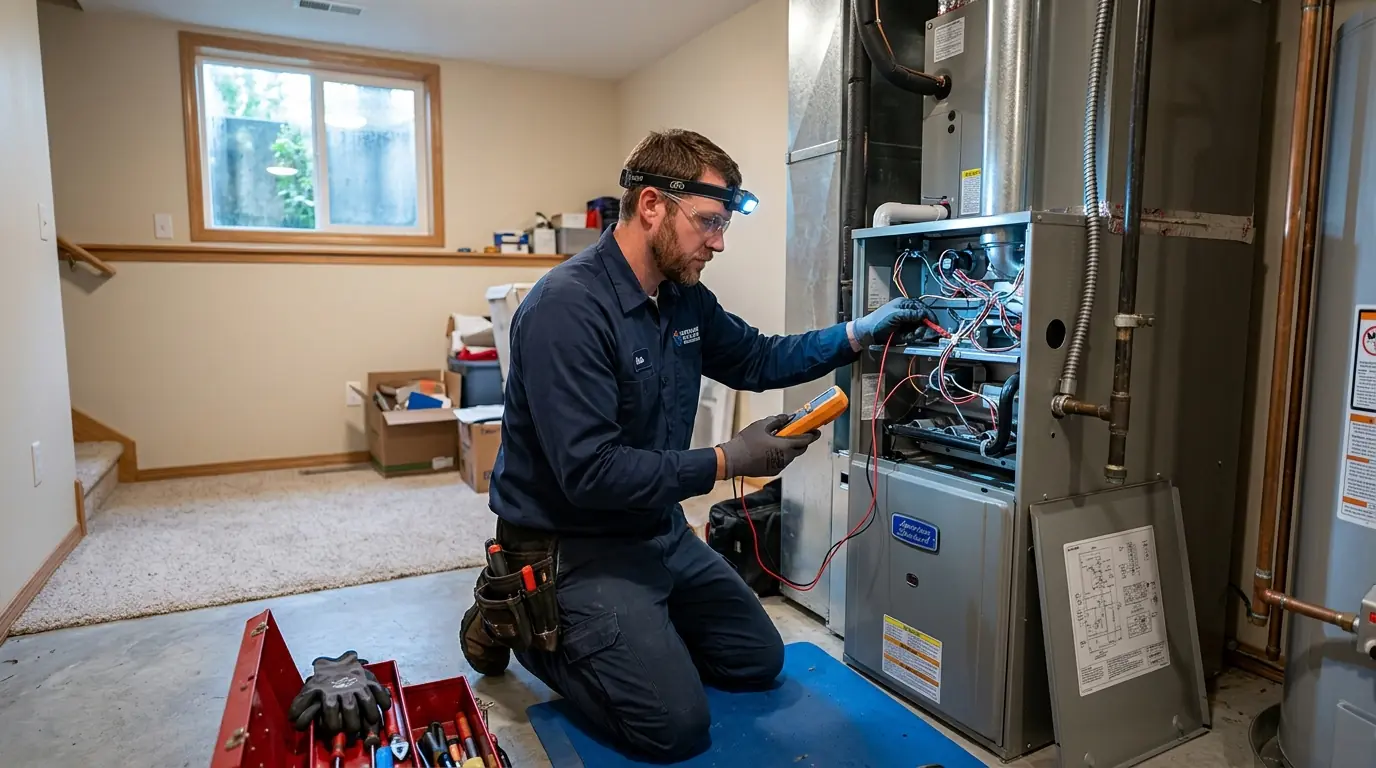
Quick answerAn ERV or HRV for a Spokane home is a balanced ventilator that pulls stale air out of kitchens and baths and brings filtered outdoor air in, passing both streams through a core that recovers most of the heat. Installs take one to two days and tie into the furnace ductwork or a dedicated duct system.
Updated September 2026
When a house needs planned fresh air
Older houses leak enough air that ventilation happens whether you want it or not. Newer homes, and older ones that got new windows, insulation and air sealing, do not. The signs are condensation on window glass in winter, bathroom mold that comes back, smells that hang around and a stuffy feeling in bedrooms by morning.
A balanced ventilator runs quietly and continuously at a low rate. Exhaust air leaves from the wet rooms, fresh air arrives through a filter, and the two streams cross inside a heat-exchange core without mixing, so in January the incoming air is warmed by the air going out.
What sets the price of a ventilator install
What a ventilation install includes
Ventilation systems we install
Energy recovery ventilators
An ERV moves some moisture along with the heat, so it keeps winter air from getting too dry and keeps summer humidity from coming inside. Spokane air is dry for much of the year, and an ERV holds on to the moisture your household produces instead of throwing it outside with the exhaust. We usually recommend an ERV for homes where occupants already struggle with dry winter air or run a humidifier, and for houses that stay closed up through smoke season.
Heat recovery ventilators
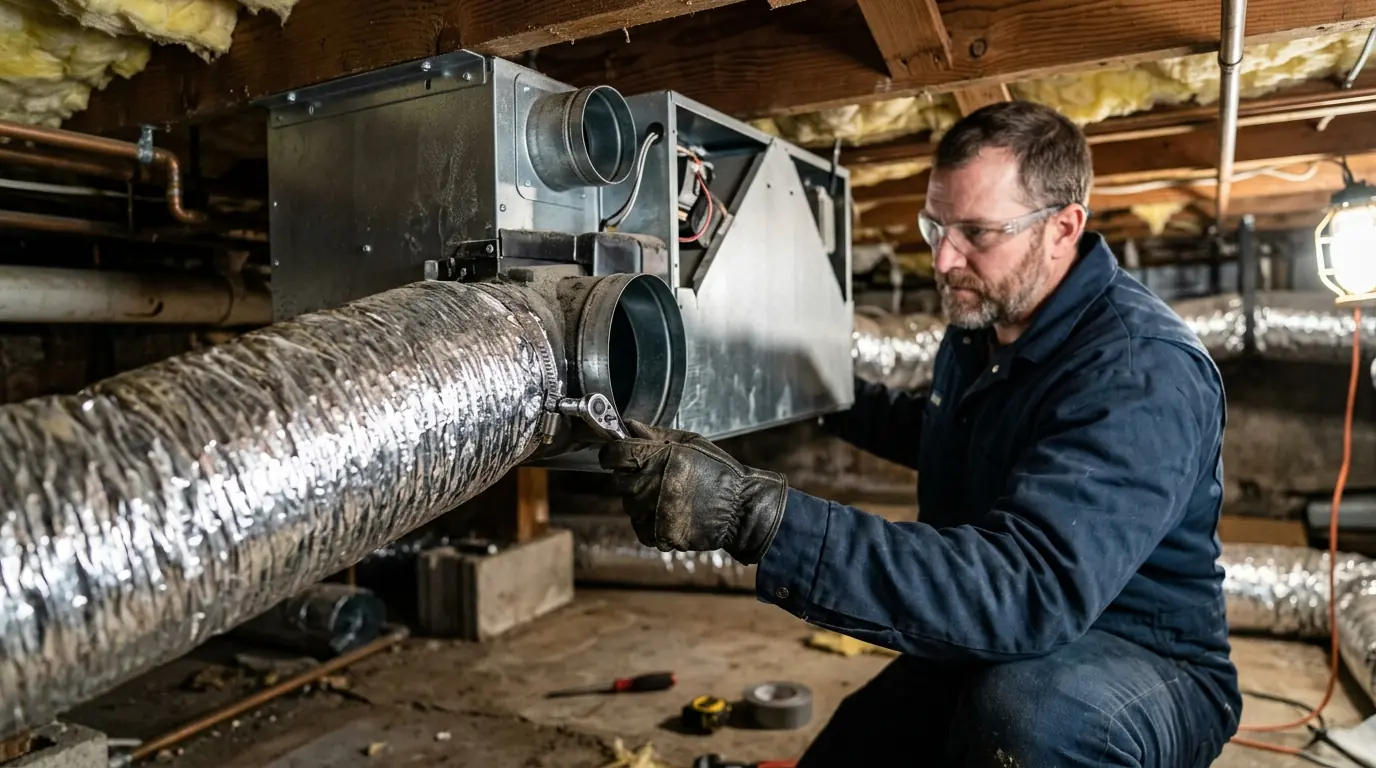
An HRV transfers heat but not moisture, so it removes indoor humidity along with the stale air. That makes it the better fit for homes with too much moisture: a family of five in a tight house, a basement that smells damp, or window glass that drips every cold morning. It recovers a similar share of heat to an ERV. The core needs a condensate drain because moisture can collect inside it in freezing weather, which we plumb to the nearest floor drain or pump.
Fresh-air intakes for tight homes
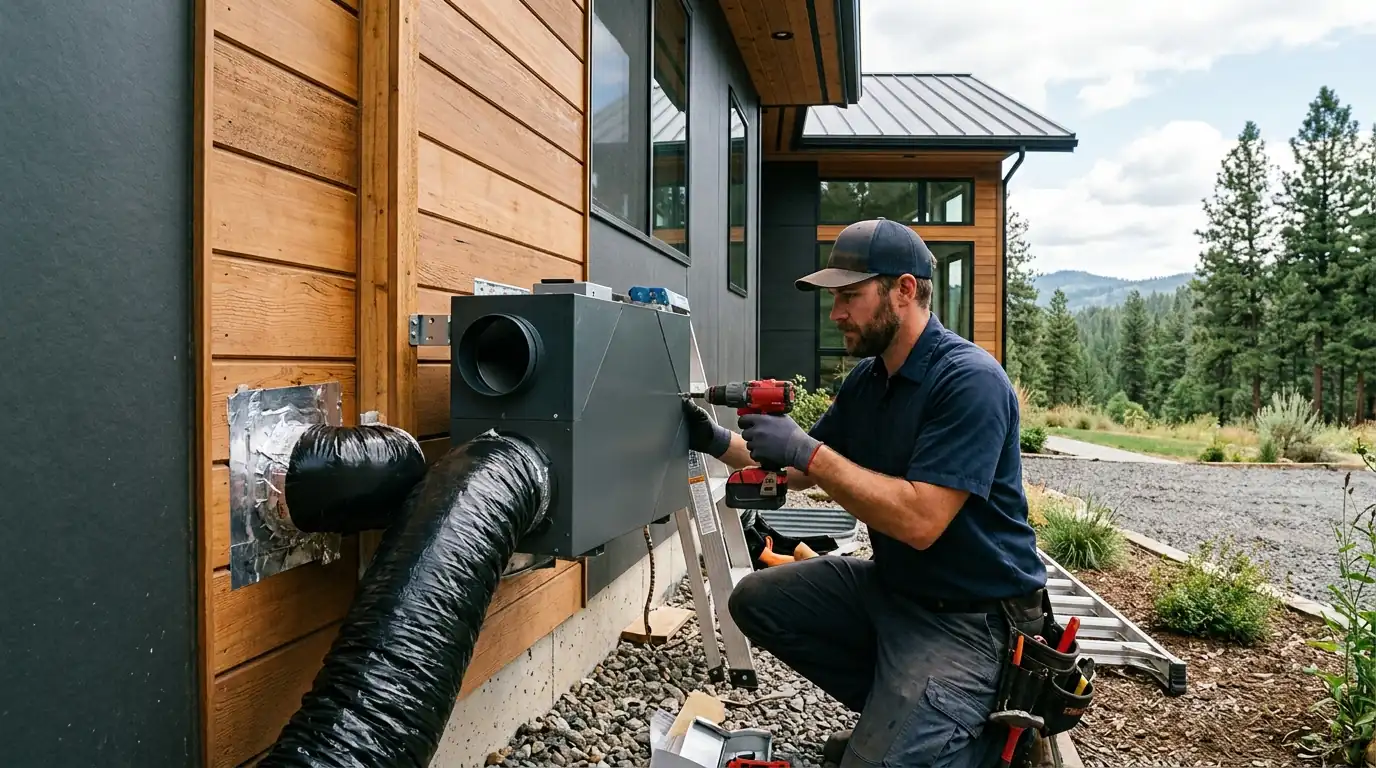
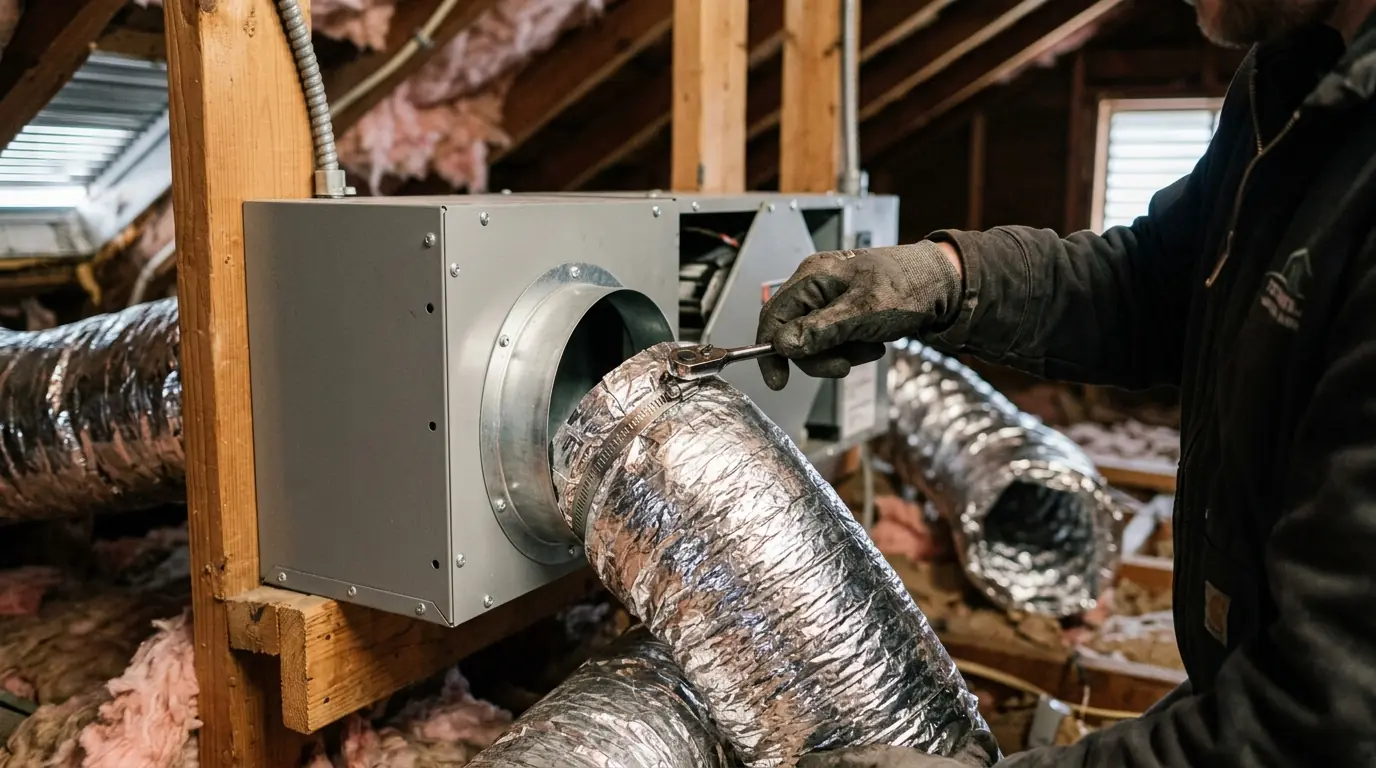
Not every house needs a full ventilator. A simpler option is a fresh-air intake: an insulated duct from an outdoor hood to the furnace return, with a motorized damper and a filter, controlled so it opens for set minutes each hour while the blower runs. It costs less and suits smaller homes, but it brings in cold air untreated, so we size it modestly and pair it with good bath and kitchen exhaust. We explain the trade-off before you choose.
ERV, HRV or a simple intake
| ERV | HRV | Fresh-air intake | |
|---|---|---|---|
| Recovers heat | Yes | Yes | No |
| Handles moisture | Keeps some indoors | Removes it | No control |
| Best for | Dry winters, smoke season | Damp or crowded homes | Small homes on a budget |
| Needs a drain | Sometimes | Yes | No |
Tighter houses and smoke seasons around Spokane
About a quarter of the homes in Spokane County were built after 2000, and those tighter houses are where planned ventilation matters most. In August 2026 homes across Spokane and Spokane Valley sat in smoke from the Old Trails, Autumn Lane and Fairview fires, which is why every ventilator we install gets a filter on the intake side and a control that lets you switch it to recirculate on bad air days.
How a ventilator install goes
- 1
Look at the symptoms
Condensation, odors, moisture readings and how tight the house is.
- 2
Choose the system
ERV, HRV or intake, based on moisture and house size.
- 3
Plan the ducts
Exhaust pickups in wet rooms, fresh-air delivery to living areas.
- 4
Mount the unit
Hung on vibration isolators near the furnace.
- 5
Cut in the hoods
Intake and exhaust hoods separated and sealed at the wall.
- 6
Wire and set controls
Low continuous rate plus boost from the bathrooms.
- 7
Balance the flows
Supply and exhaust measured and matched.
Ventilation questions
Do I need an ERV or HRV?
If your windows sweat, bathrooms grow mold or the house smells stale, you likely need planned ventilation. We check moisture and air tightness before recommending one.
Will it make my house colder in winter?
Only slightly. The core recovers most of the heat from outgoing air, and the unit runs at a low rate most of the time.
Does it help with wildfire smoke?
It brings in outdoor air, so on smoky days you switch it to recirculate or off. The intake filter catches much of the smoke when it runs.
How often does it need service?
Filters every few months and a core cleaning once a year, which we can do during the furnace tune-up.
Is a bathroom fan enough?
For many older homes, yes. Tight newer homes usually need balanced ventilation because a fan alone pulls in air through random leaks.
Other air quality & ductwork services we handle
Radon Mitigation
Sized, quoted and permitted.
Radon Mitigation detailsAir Duct Cleaning
Seasonal service, fewer breakdowns.
Air Duct Cleaning in SpokaneDuctwork Installation
Sized, quoted and permitted.
How we handle ductwork installationFresh air without losing your heat.
Call about an ERV or HRV for your Spokane, WA home.