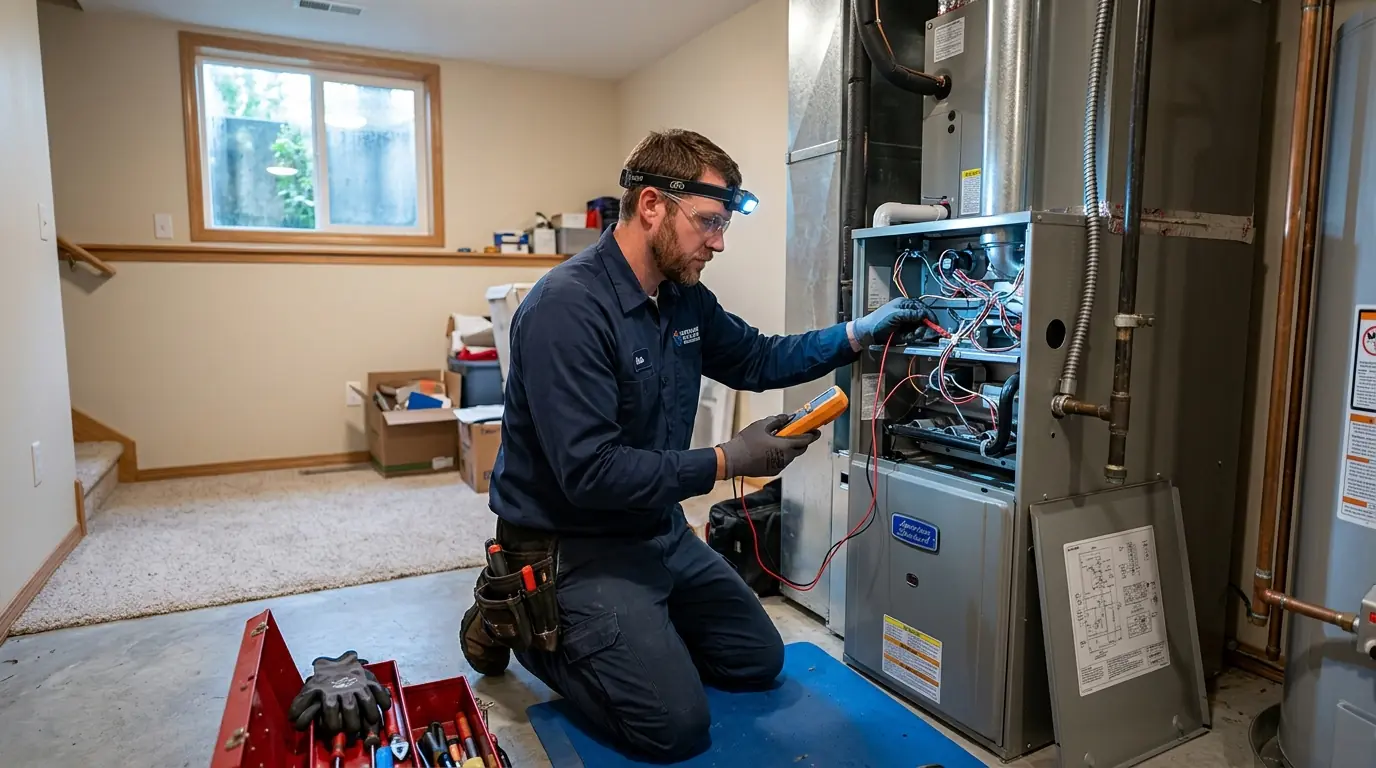
Quick answerFurnace repair in Spokane starts with the furnace's own fault code and a check of the ignition sequence: inducer, pressure switch, ignitor, flame sensor, then the blower. That order finds most failures in under an hour, and the parts behind them, ignitors, sensors, capacitors and switches, are carried on the truck for same-visit repair.
Updated September 2026
Finding why the furnace stopped
A modern furnace runs a fixed sequence every time it starts, and it stops at the first step that fails. The blinking light on the control board records where.
We also check what caused the failure. A flame sensor coated in residue, a pressure switch tripped by a blocked vent, or a blower overheating on a filthy filter will fail again if only the part is swapped.
Furnace repairs we do most
Blower motor replacement
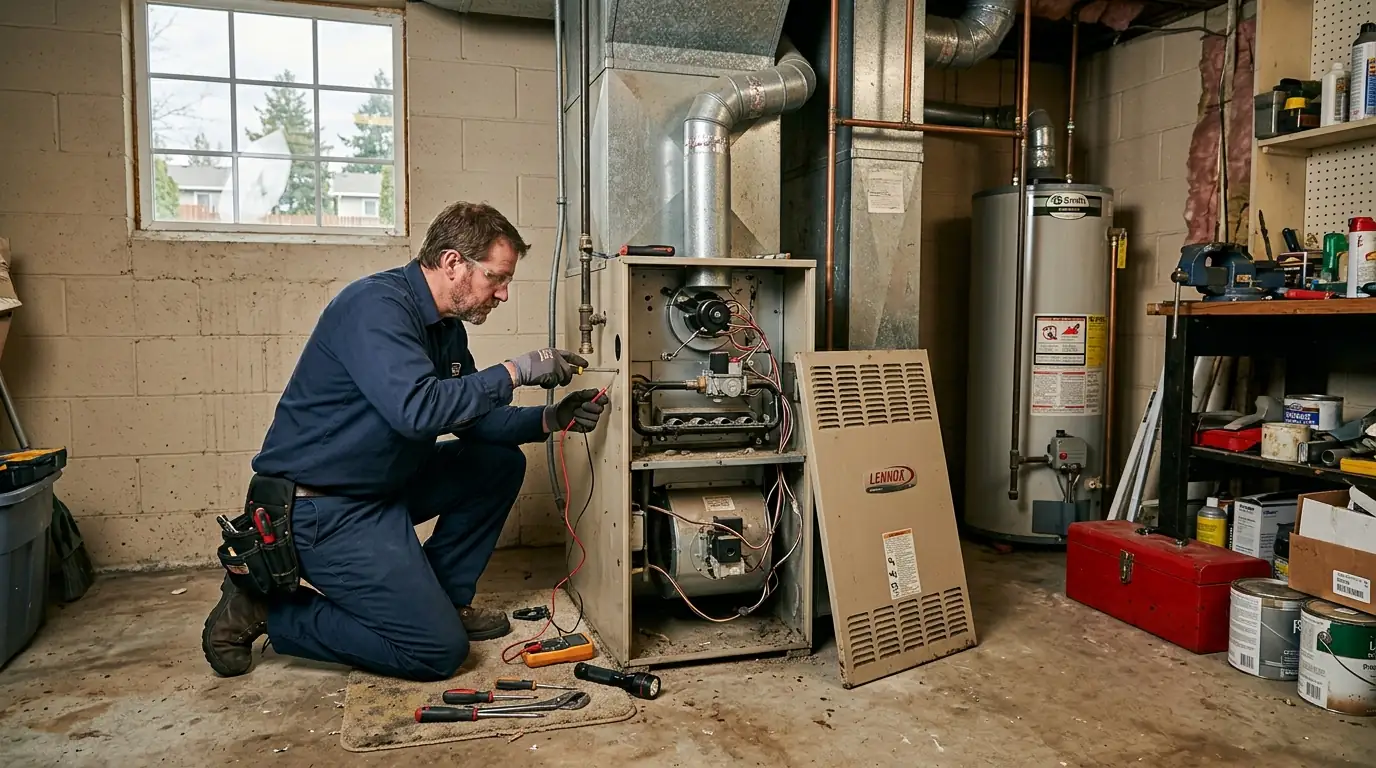
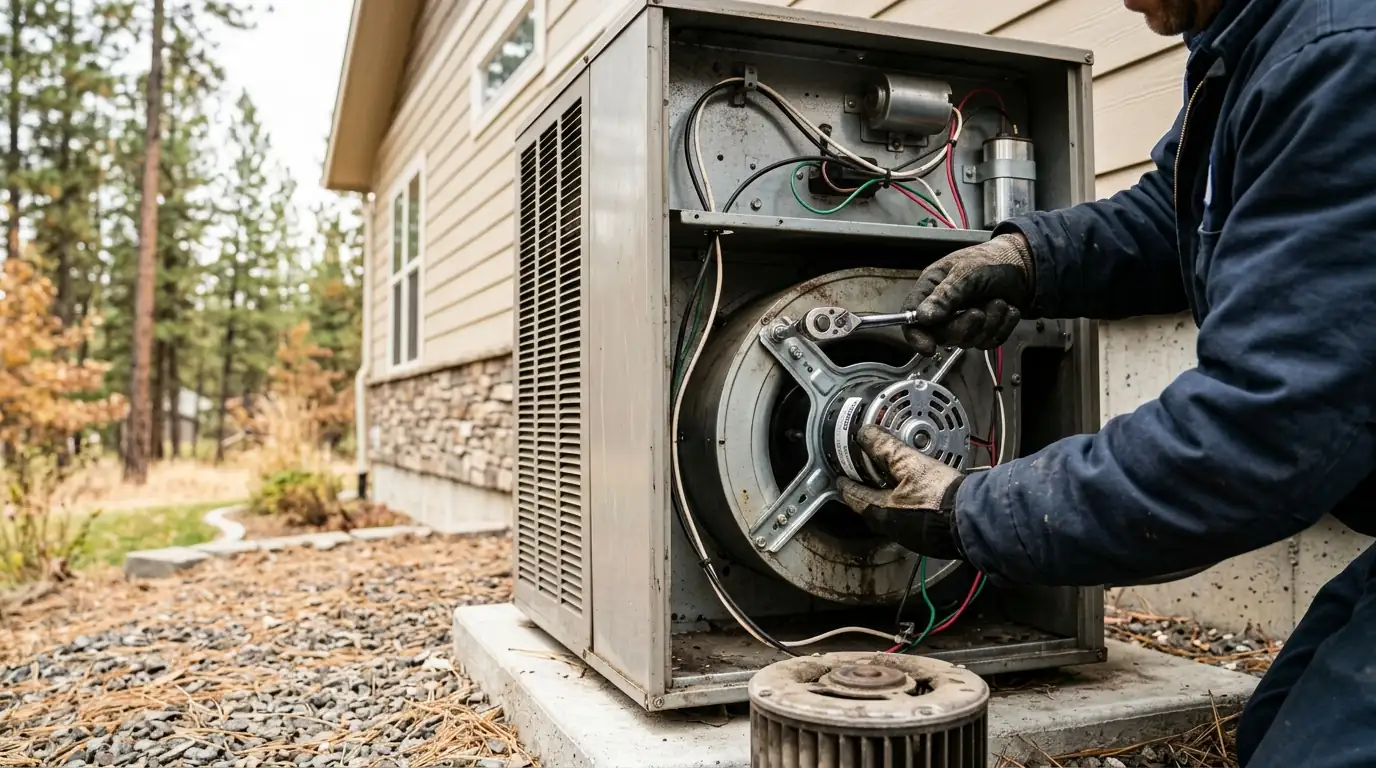
When the furnace fires but no air comes out, or the blower hums without turning, the motor or its run capacitor has usually failed. A weak capacitor is the cheaper fix and we test it first. If the motor itself is seized or its windings are open, we replace it with a matched motor, or with a variable-speed ECM motor when the control board supports it. We also check the blower wheel for dirt buildup, which strains the motor and cuts airflow through the whole house.
Ignitor and flame sensor repair
A furnace that tries to light, clicks, then shuts down after a few seconds usually has a dirty flame sensor that cannot confirm the flame. Cleaning or replacing it takes minutes. An ignitor that no longer glows is another common failure, especially the brittle silicon carbide type found on older furnaces. We replace it with the correct part, check the gas pressure, and watch several complete cycles to make sure the furnace lights and stays lit reliably. A spare sensor for your model often lives on our truck.
Cracked heat exchanger
The heat exchanger keeps combustion gases separate from the air you breathe. When it cracks, carbon monoxide can reach the living space. Signs include a flame that dances when the blower starts, soot around the burners or a carbon monoxide alarm. We inspect with a camera and a combustion analyzer, and if we confirm a crack we shut the furnace off and tag it. Replacing a heat exchanger on an older furnace rarely makes sense, so we quote replacement alongside it.
Electric furnace repair
Electric furnaces heat with resistance elements switched on in stages by sequencers or relays. When some elements fail, the furnace runs but the house never quite warms; when a sequencer sticks, you may get no heat or heat that will not shut off. We test each element, relay and limit switch, check the breakers and wiring for heat damage, and replace what failed. We also check whether a heat pump would cut the operating cost of an electric system, and quote it if you want the comparison.
Signs your furnace is failing
How a furnace repair visit goes
- 1
Read the fault code
Blink pattern logged before power is cycled.
- 2
Watch the sequence
Inducer, switch, ignition and flame checked in order.
- 3
Test the part
Meter readings confirm the failure.
- 4
Check the cause
Filter, venting, gas pressure and airflow inspected.
- 5
Quote and repair
Price approved, then the part replaced.
- 6
Safety checks
Carbon monoxide and combustion tested.
- 7
Run full cycles
Several heat cycles watched before we leave.
Aging furnaces across Spokane County
The median home across Spokane County dates to 1978, and roughly one in four was built between 2000 and 2019. On Five Mile Prairie, where rural land has been turning into subdivisions since the early 2000s, many of the original furnaces are now 20 years old, which is the age when inducer motors, control boards and pressure switches start failing one after another.
What to check before you call
| Safe to check yourself | Call us | |
|---|---|---|
| Thermostat | Set to heat, fresh batteries, setpoint above room temperature | If it has power but the furnace will not respond |
| Filter | Replace if clogged | If the furnace still overheats or shuts off |
| Power switch and breaker | Confirm both are on | If the breaker trips again |
| Outdoor vent pipes | Clear snow or ice from the intake and exhaust | If the furnace still will not light |
| Gas smell or CO alarm | Leave the house | Call the gas utility, then us |
What affects a furnace repair bill
Furnace repair questions
Why is my furnace blowing cold air?
Usually a dirty flame sensor, a failed ignitor or a tripped limit from a clogged filter. Check the filter first, then call.
Can you come tonight?
Yes. The line is answered 24/7 and no-heat calls are dispatched after hours.
Is it worth repairing an old furnace?
If it is under about 15 years old and the repair is a common part, usually yes. A cracked heat exchanger or a repair over a third of replacement cost tips it the other way.
Can snow stop my furnace?
Yes. High-efficiency furnaces vent through plastic pipes on the side of the house, and drifting snow can block them. Clearing them often restores heat.
Which brands do you repair?
All common brands, including Carrier, Trane, Lennox, Bryant, Rheem, Goodman and Amana.
Other furnaces, boilers & electric heat services we handle
Emergency Heating Repair
Answered 24/7, parts on the truck.
Emergency Heating Repair detailsFurnace Tune-Up
Seasonal service, fewer breakdowns.
Furnace Tune-Up in SpokaneBoiler Maintenance
Seasonal service, fewer breakdowns.
How we handle boiler maintenanceNo heat? call now and we will get moving.
Call for furnace repair in Spokane, WA at any hour.