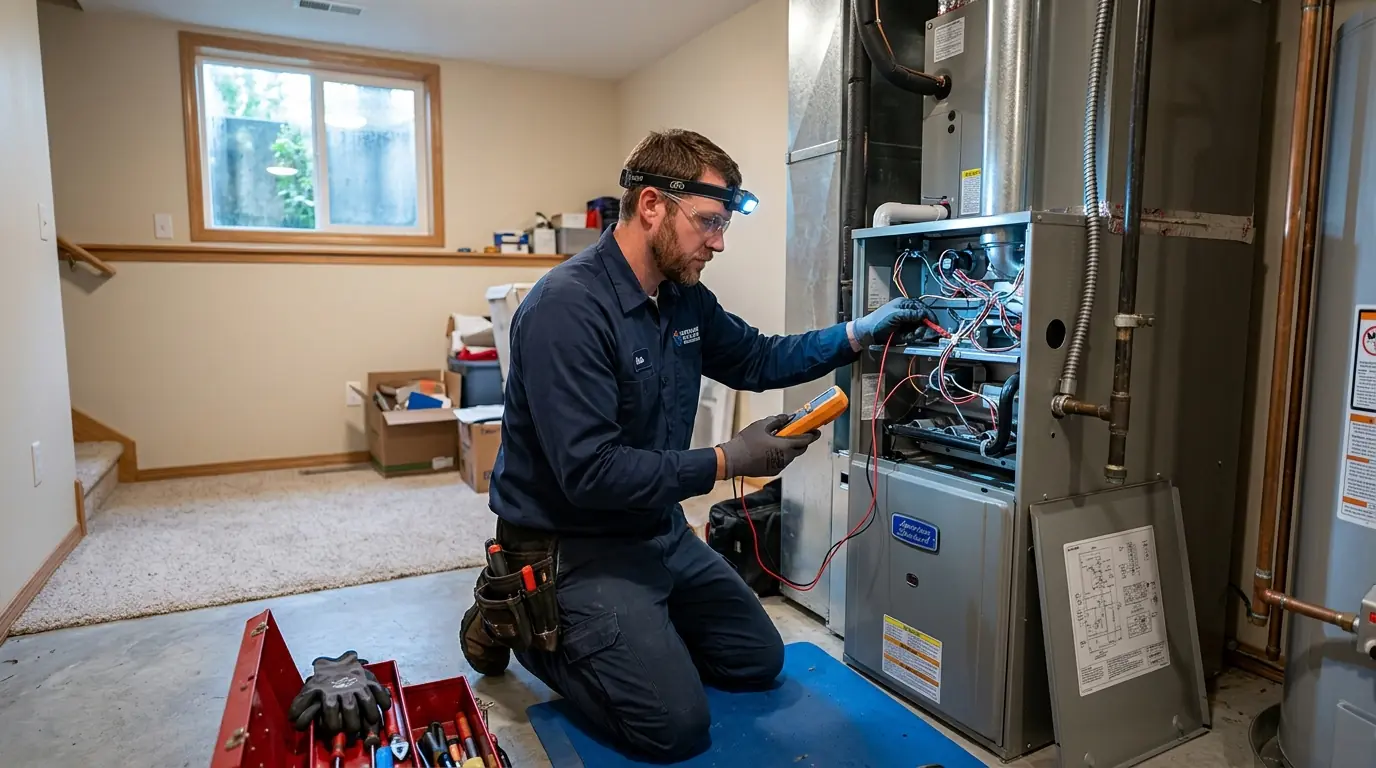
Quick answerEmergency heating repair in Spokane means a live answer at any hour and a technician dispatched for no-heat calls on furnaces, boilers and heat pumps. While you wait, check the thermostat, the breaker and snow on the outdoor vent pipes. Most after-hours repairs are ignitors, sensors, pressure switches and blower parts carried on the truck.
Updated September 2026
What happens when you call at night
When you call after hours, a person answers, asks what the system is doing and how cold the house is getting, and gives you an arrival window. Homes with infants, elderly residents or medical needs, and houses already below 55 degrees, go to the front of the line.
The technician brings the parts that cause most no-heat calls. If the repair needs a part we do not carry, we make the system safe, get heat running some other way where possible, and schedule the part for first thing.
The after-hours calls we take
No-heat calls
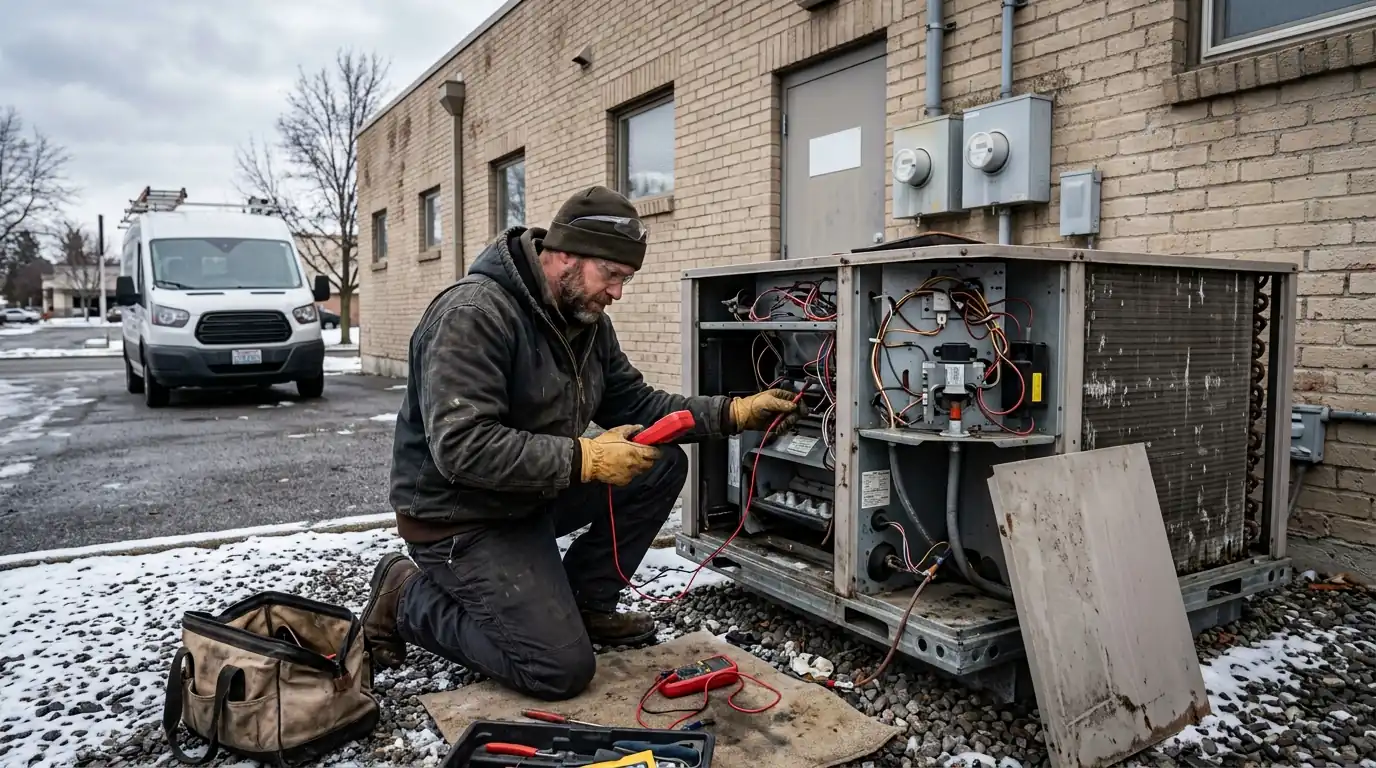
Most no-heat calls come down to the furnace stopping partway through its start sequence. A flame sensor too dirty to prove the flame, an ignitor that has cracked, a pressure switch that will not close because the vent is iced or blocked, or a blower that will not start. We read the control board's fault code, watch the sequence and test the failing part. On boilers, it is usually the burner, the circulator or low water pressure. On heat pumps, a stuck defrost cycle or a failed backup heat element.
After-hours furnace repair
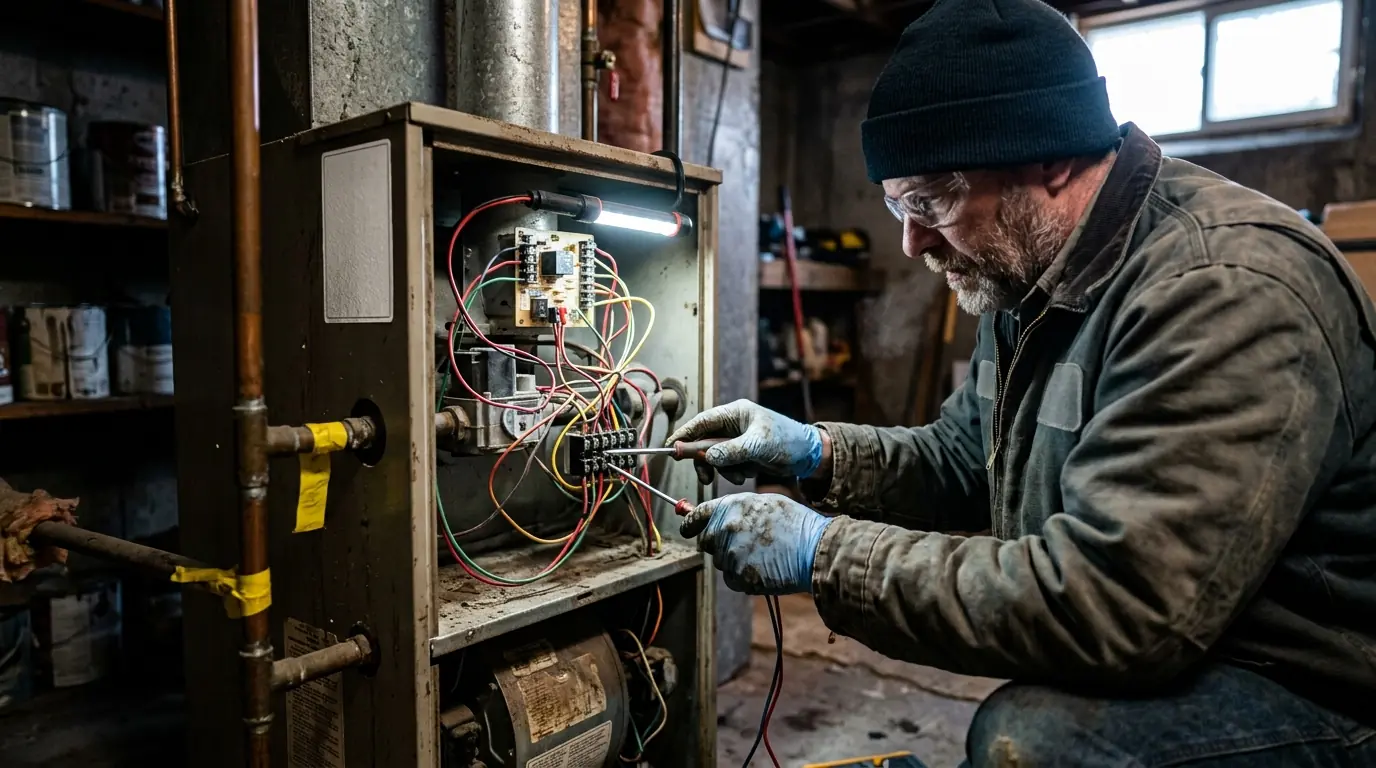
Night and weekend repairs follow the same diagnosis as a daytime call, and we quote before we fix. The price is higher because the technician is working outside normal hours, and we tell you that on the phone rather than on the invoice. If a repair can safely wait until morning, for example a furnace that is running but noisy, we say so and schedule it at the daytime rate. We would rather you save the money than pay for urgency you do not need.
Frozen-line and short-cycling faults
Two cold-weather failures show up again and again. High-efficiency furnaces vent through plastic pipes on the side of the house, and in heavy snow or ice those pipes block, the pressure switch trips and the furnace locks out. Condensate lines running through cold spaces can freeze and shut the furnace down too. Short cycling, where the furnace fires and shuts off every few minutes, usually points to an overheating limit from a clogged filter or a sensor losing the flame. Each has a fix we can make on the spot.
How long until the heat is back
Most after-hours repairs take about an hour once the technician is on site, because the parts behind most no-heat calls are on the truck. Arrival depends on the night: a quiet evening means a short wait, a subzero night after a storm means a longer one, and we tell you honestly which kind of night it is when you call.
How an emergency heating call runs
- 1
You call
A person answers, any hour.
- 2
Triage
We ask how cold the house is and who is home.
- 3
Arrival window
You get a time and a call when we are close.
- 4
Safety first
Gas smell or CO alarms handled before anything else.
- 5
Diagnose and quote
Fault found, price approved.
- 6
Repair
Part replaced, system run through full cycles.
- 7
Follow-up
Anything left to do is scheduled for daytime.
Why Spokane no-heat calls cannot wait
Spokane temperatures usually stay between about 26 and 88 degrees over the year, but they do drop below 11 degrees on the coldest nights, and a house without heat loses temperature fast in that weather. Pipes in exterior walls and crawlspaces become the next risk after comfort. That is why after-hours no-heat calls are dispatched rather than pushed to the next morning.
What to do while you wait
| Do this now | Leave it for us | |
|---|---|---|
| Thermostat | Set to heat, check batteries | Wiring or board problems |
| Breaker and switch | Reset once if tripped | A breaker that trips again |
| Outdoor vent pipes | Clear snow and ice from the intake and exhaust | Frozen condensate lines inside |
| Staying warm | Close off unused rooms, open cabinet doors on exterior walls | Opening the furnace |
| Gas smell or CO alarm | Leave the house and call the gas utility | Everything |
What affects the cost of an emergency call
Emergency heating questions
Do you really come out at night?
Yes. The line is answered 24/7 and no-heat calls are dispatched after hours, including weekends and holidays.
Does an emergency call cost more?
Yes, after-hours work carries a higher rate. We tell you on the phone, and if the repair can safely wait, we schedule it at the daytime rate.
What should I check before calling?
The thermostat setting and batteries, the breaker, the furnace switch, and snow or ice on the outdoor vent pipes.
What if I smell gas?
Leave the house, then call the gas utility from outside. Once it is safe, call us to repair the equipment.
How can I protect my pipes while I wait?
Keep cabinet doors open on exterior walls, let a faucet drip, and close off unused rooms to hold heat where people are.
Other furnaces, boilers & electric heat services we handle
Furnace Tune-Up
Seasonal service, fewer breakdowns.
Furnace Tune-Up detailsBoiler Maintenance
Seasonal service, fewer breakdowns.
Boiler Maintenance in SpokaneManufactured Home Furnace and AC Service
Answered 24/7, parts on the truck.
How we handle manufactured home furnace and ac serviceNo heat right now? call.
Call for emergency heating repair in Spokane, WA. A person answers, day or night.