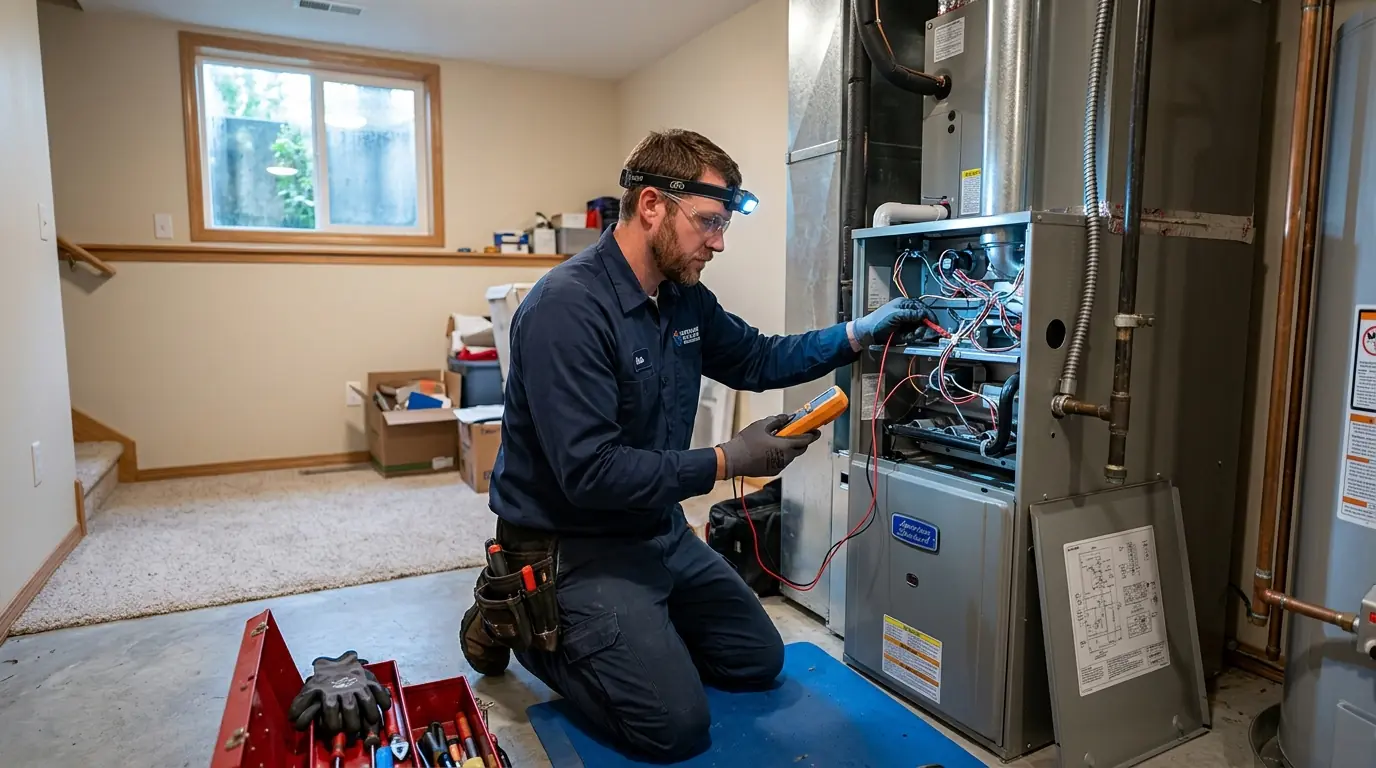
Quick answerCommercial HVAC maintenance in Spokane means scheduled visits, usually quarterly or twice a year, where a technician changes filters, checks belts, cleans coils and drains, tests heating safeties before winter and refrigerant circuits before summer, and leaves a written report for each unit. Most visits are done without shutting the building down.
Updated September 2026
What scheduled maintenance prevents
Rooftop units live outside through snow, summer heat and smoke seasons, and they rarely get looked at until something fails. A loaded filter starves the coil, a worn belt slips until the blower stops, and a plugged condensate drain sends water through a ceiling tile.
We set a schedule that fits the building: restaurants and busy retail spaces usually need quarterly filters, offices often do well with spring and fall visits. Each unit gets a tag, a checklist and a line in the report, so you know which ones are aging and can plan replacements instead of reacting to them.
What each visit covers
Quarterly filter and belt service
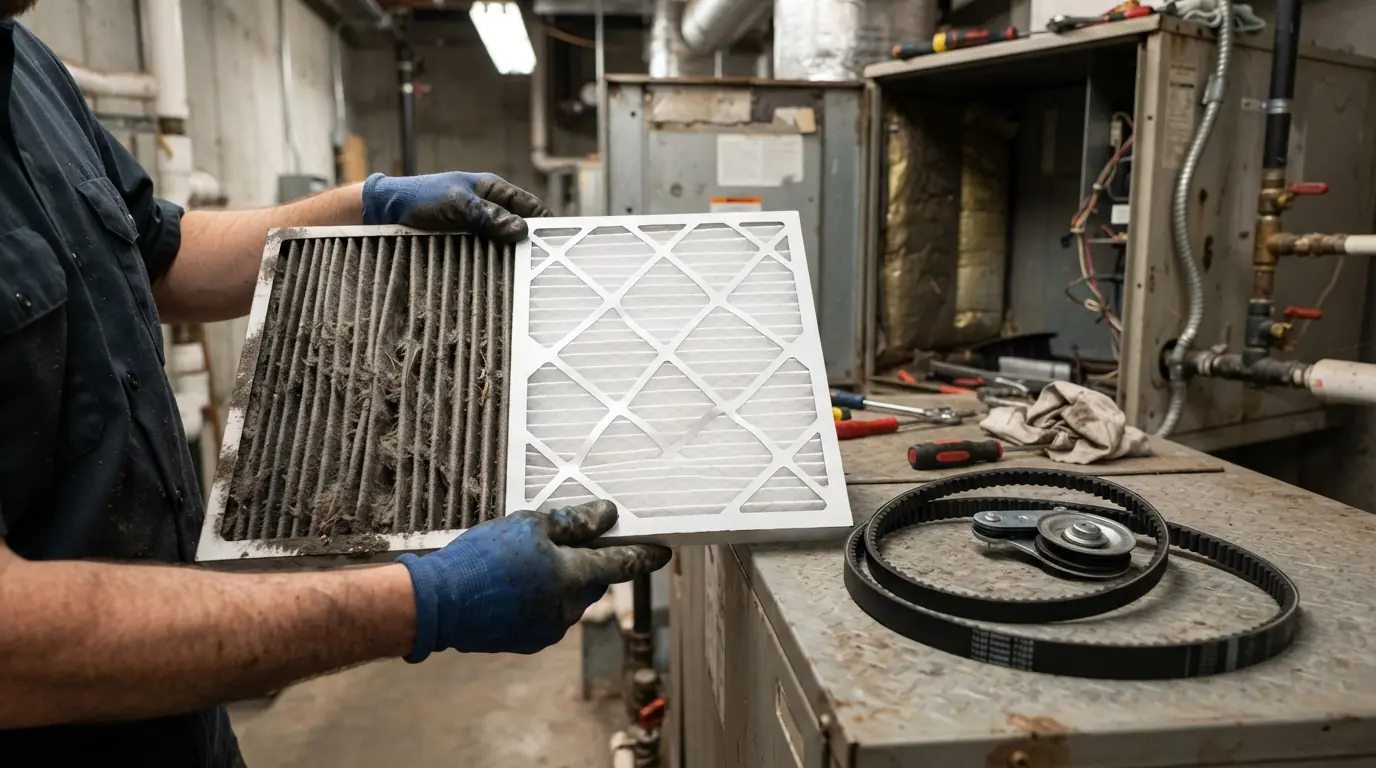
Filters are the most important maintenance item on any commercial unit, and the schedule depends on the building. We change them on your chosen interval, record the size and rating for each unit, and upgrade to a higher-grade filter where smoke or kitchen grease loads them quickly. Belts get checked for cracks, glazing and tension at every visit and replaced before they break. We also lubricate bearings on older blowers and check that access panels and screws are all back in place before we leave.
Coil cleaning
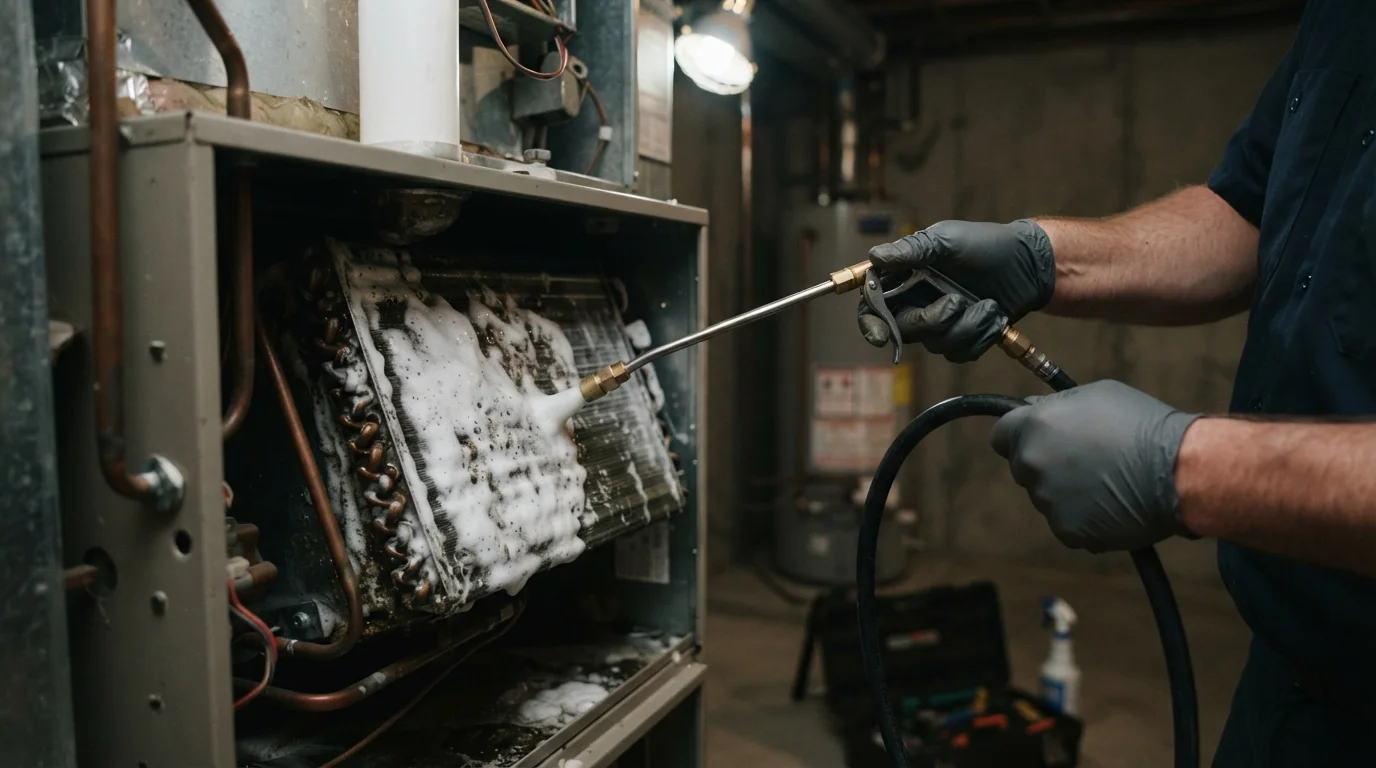
Dirty condenser coils make a unit run hotter and longer in summer, and dirty evaporator coils cut airflow and can freeze. We clean condenser coils with a coil cleaner and low-pressure rinse, working from the inside out so dirt is pushed out rather than deeper into the fins. Evaporator coils are cleaned in place where access allows. Kitchen units and rooftops over busy parking lots may need this more than once a year, and we note which units are worst so the schedule can match.
Pre-season commercial checks
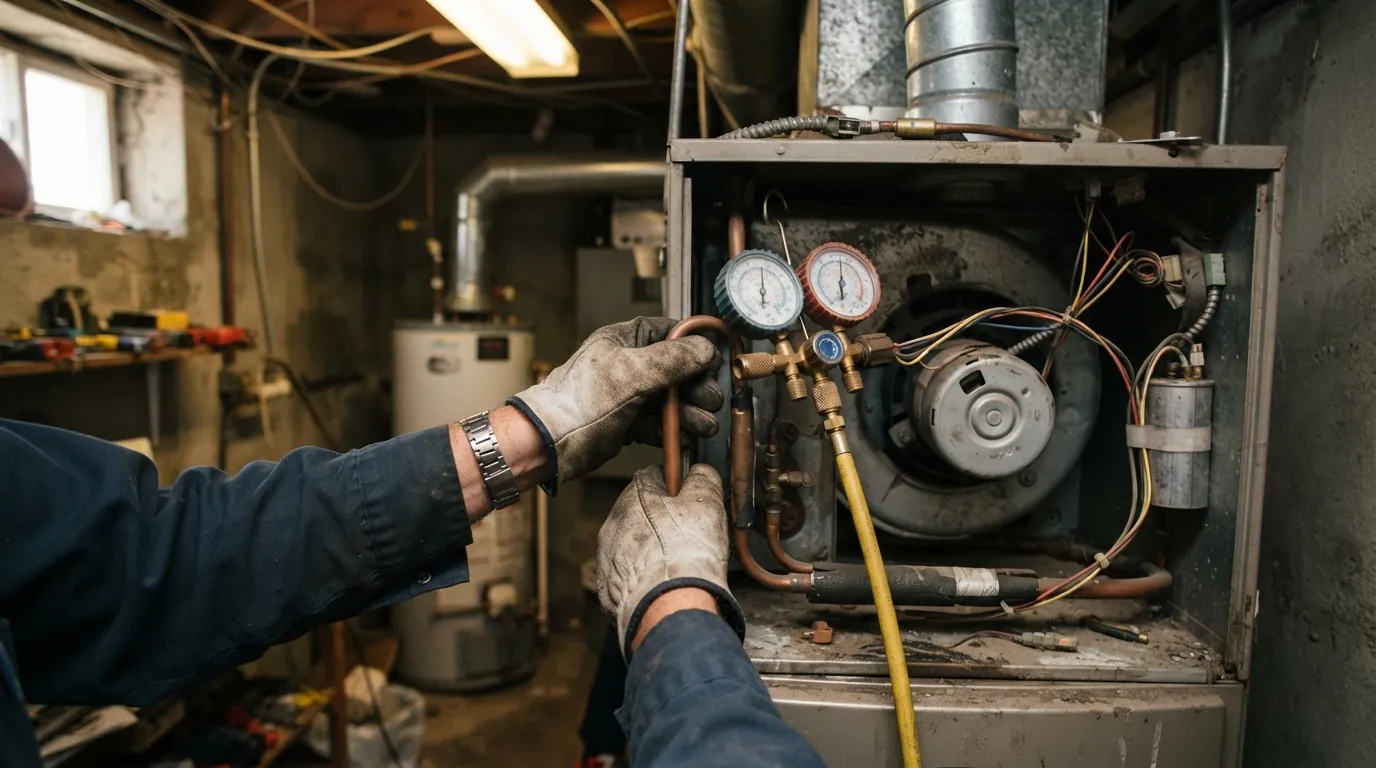
Before heating season we test each gas heat section: ignition, flame sensing, gas pressure, heat exchanger inspection and the high-limit and rollout safeties. Before cooling season we check refrigerant pressures, compressor and fan amperage, economizer operation and the condensate drain. Economizers get particular attention, because one stuck open in January floods the space with freezing air and one stuck closed in spring wastes free cooling. Each unit's readings go into the report so trends show up before failures.
What every commercial visit includes
How a maintenance visit runs
- 1
Check in on site
We confirm access and any comfort complaints.
- 2
Tag and inspect
Each unit tagged and visually inspected.
- 3
Filters and belts
Changed or adjusted as scheduled.
- 4
Clean coils and drains
Condenser, evaporator and condensate line cleared.
- 5
Test the season
Heat safeties in fall, refrigerant and economizer in spring.
- 6
Note repairs
Anything worn is photographed and quoted, not fixed without approval.
- 7
Send the report
A written summary per unit by email.
Smoke, snow and two cities of rooftops
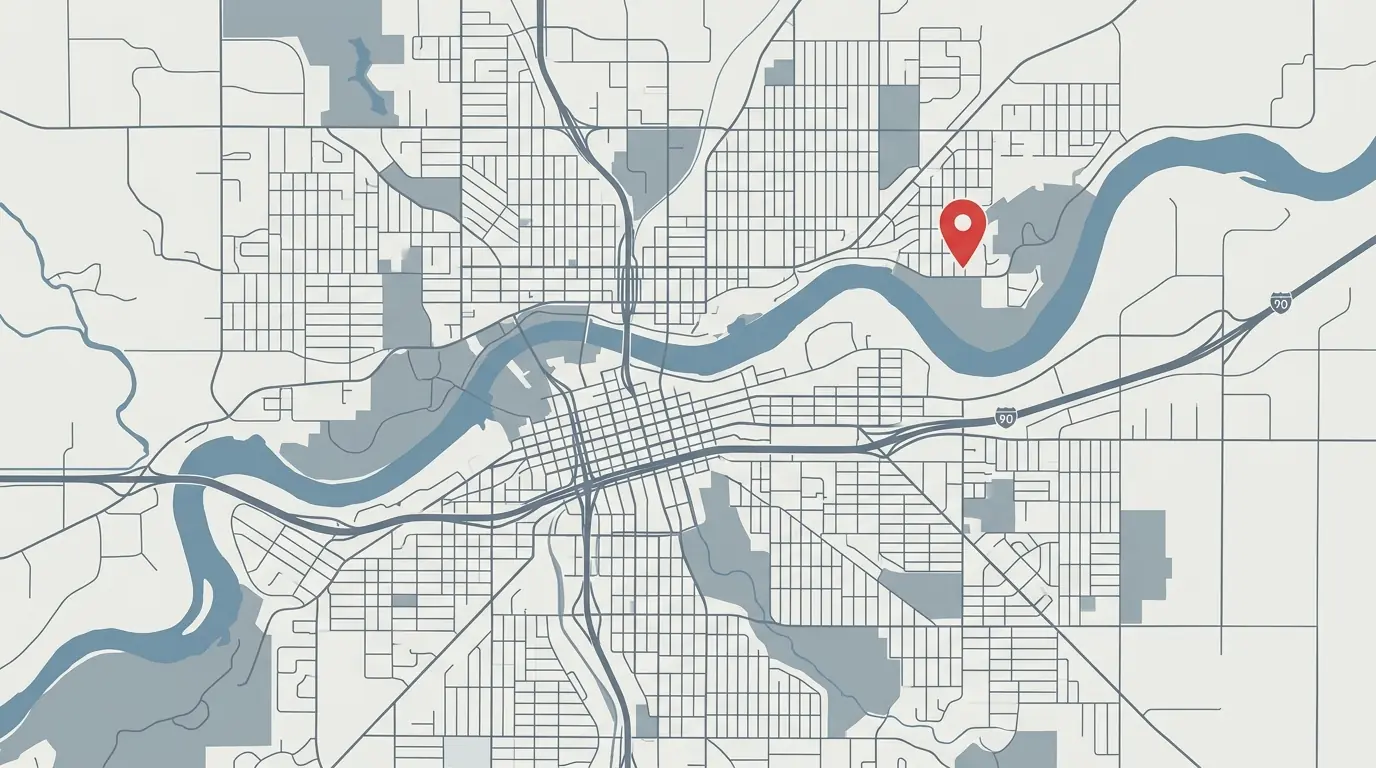
Our commercial maintenance routes cover Spokane and Spokane Valley, which together make up most of the metro area's business buildings. In August 2026 those rooftops pulled air through weeks of smoke from the Old Trails, Autumn Lane and Fairview fires, and filters that normally last a quarter loaded up in a few weeks. After a smoke event we recommend an extra filter change, and we keep the filter sizes on file for every unit so we can do it quickly.
What sets the cost of a maintenance plan
Choosing a visit schedule
| Quarterly | Spring and fall | Annual | |
|---|---|---|---|
| Filter changes | Four a year | Two a year | One a year |
| Best for | Restaurants, busy retail, dusty sites | Offices, clinics | Light-use storage and warehouses |
| Seasonal checks | Both seasons plus mid-season | Both seasons | One season only |
| Breakdown risk | Lowest | Low | Higher |
Commercial maintenance questions
How often should our rooftop units be serviced?
Twice a year at minimum, spring and fall. Restaurants and dusty sites usually need quarterly filter changes.
Do you shut the building down?
Rarely. Most work is done while the building runs, with short unit shutdowns during business hours or visits after closing.
Will you fix things you find?
We note and quote them. Nothing beyond the visit is done without approval.
Do you keep records for each unit?
Yes. Each unit is tagged and gets its own line in a written report after every visit.
Do maintenance customers get priority on repairs?
We answer every call 24/7, and having the equipment on file makes diagnosis faster when something does fail.
Other commercial services we handle
Server Room Cooling
Sized, quoted and permitted.
Server Room Cooling detailsRooftop Unit Service
Answered 24/7, parts on the truck.
Rooftop Unit Service in SpokaneCommercial Boiler and Steam Service
Answered 24/7, parts on the truck.
How we handle commercial boiler and steam serviceKeep the rooftop units off the emergency list.
Call to set up commercial HVAC maintenance in Spokane, WA.