Quick answerAC repair in Spokane usually traces a warm house to a failed capacitor or contactor, a frozen evaporator coil, a dead condenser fan motor or a refrigerant leak. A technician tests the outdoor unit first, then the indoor coil and airflow, and most repairs are finished on the same visit with parts carried on the truck.
Updated September 2026
Why air conditioners quit in a heat wave
An air conditioner runs hardest on the hottest afternoons, and that is when a capacitor that has been weakening for two summers finally fails, or a coil that was already low on refrigerant freezes solid.
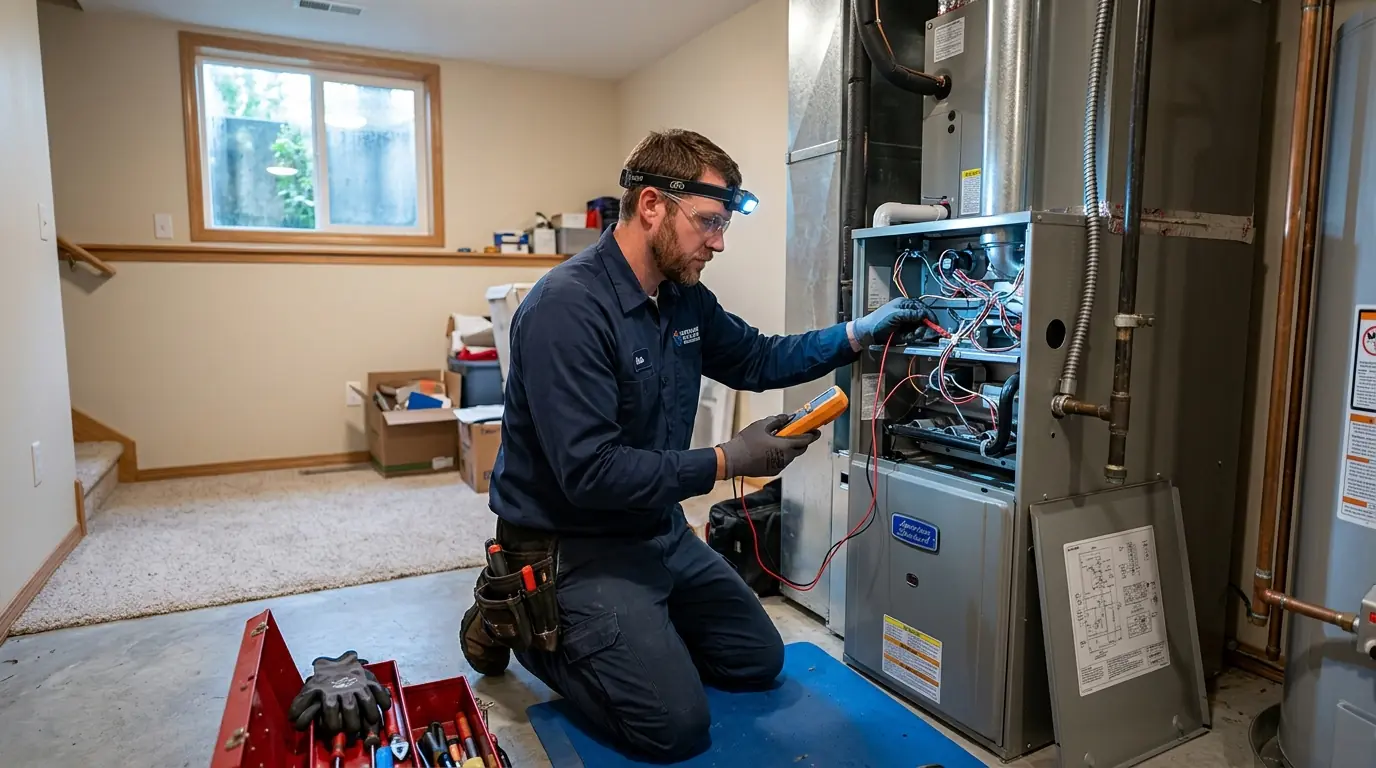
We test before replacing anything, and we look for the reason a part failed. A contactor pitted by ants, a coil frozen because of a dirty filter, or a capacitor cooked by a condenser packed with seed fluff and grass clippings will fail again unless the cause is fixed too.
AC repairs we do most
Capacitor and contactor replacement
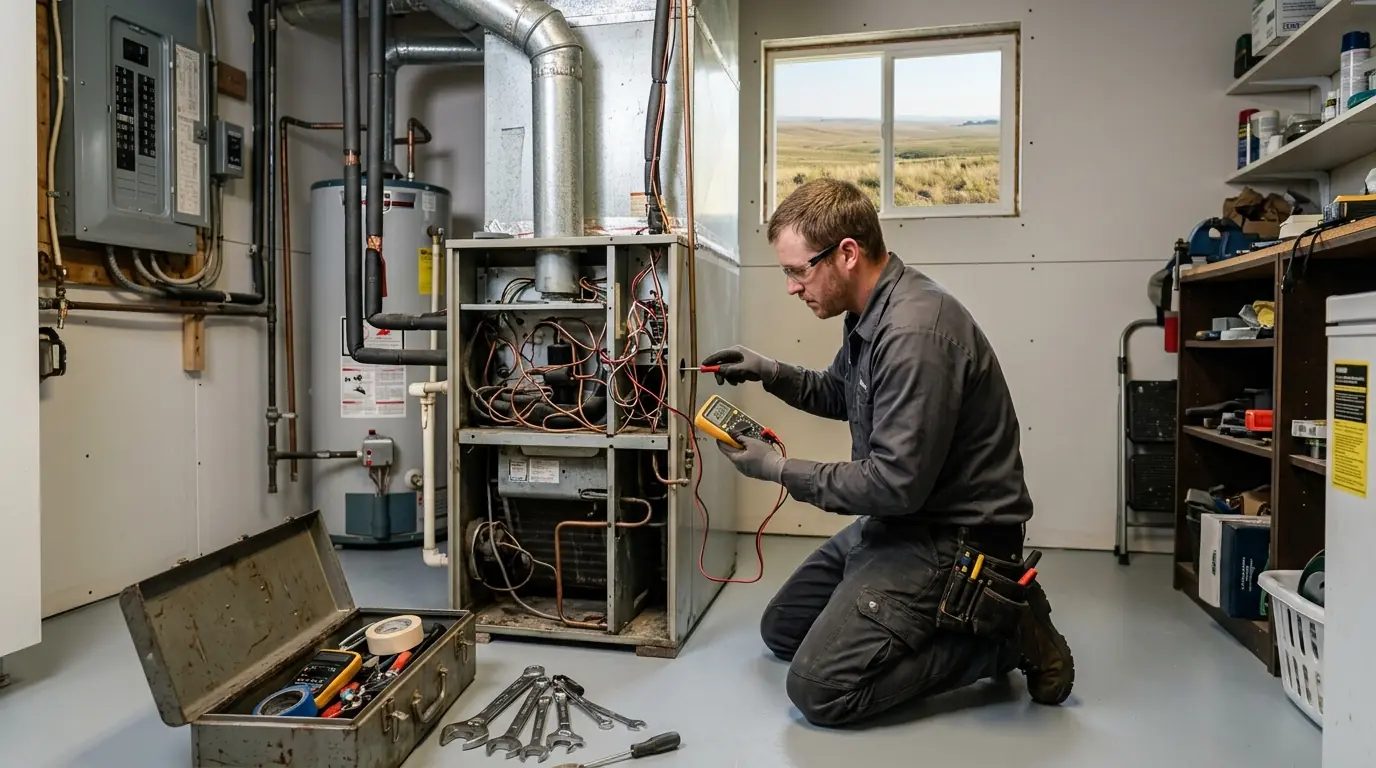
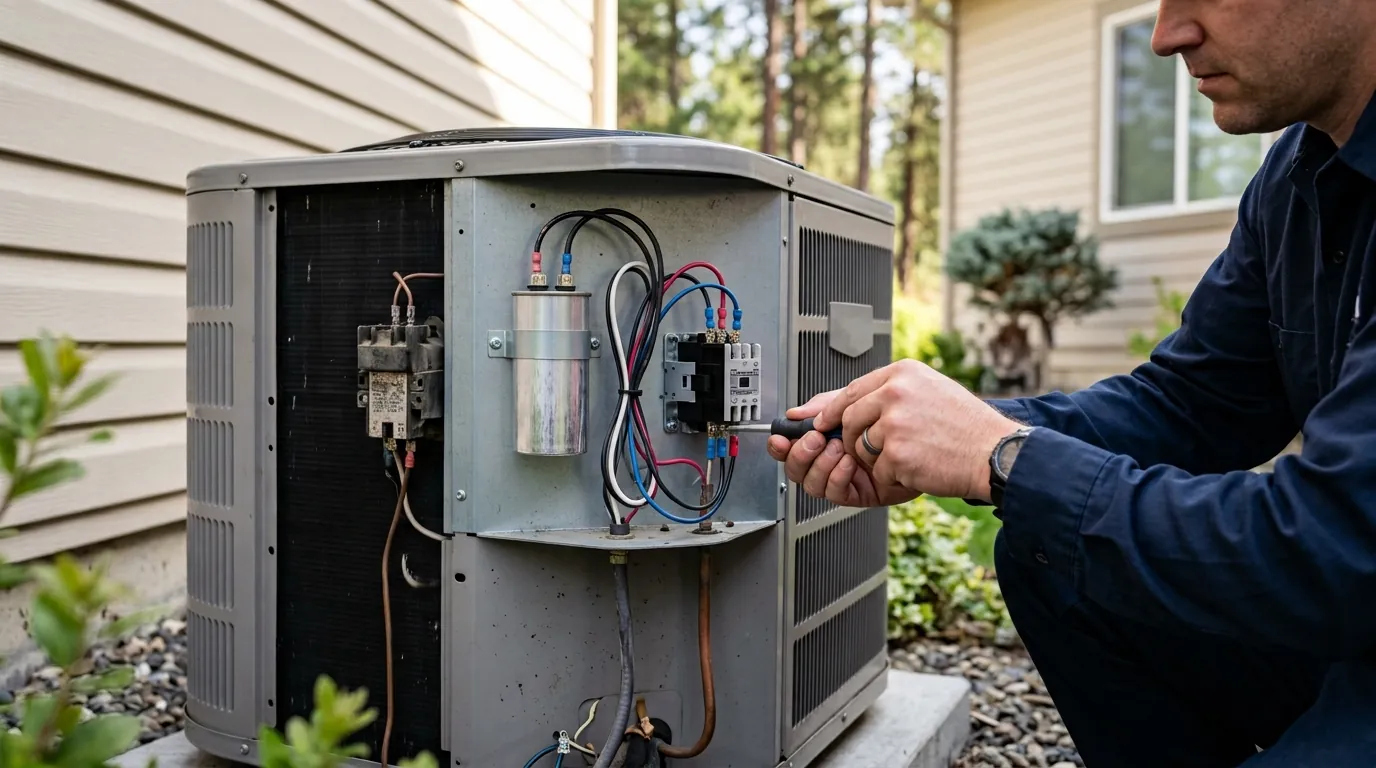
The capacitor gives the compressor and fan motor the kick they need to start, and the contactor is the switch that turns the outdoor unit on. Together they cause more no-cooling calls than anything else. A bulging capacitor or a unit that hums without starting points to the capacitor; a unit that does not respond at all when the thermostat calls often points to the contactor. We test both with a meter, replace the failed part with a correctly rated one and check the compressor's amperage afterward.
Frozen evaporator coil
Ice on the indoor coil or the refrigerant lines means the coil is running too cold, usually from low airflow or low refrigerant. A clogged filter, closed registers, a dirty coil or a weak blower can all starve it of air. We have you shut the cooling off and run the fan to thaw it, then find the cause: we check the filter and blower, clean the coil if needed, and test the refrigerant charge. If the charge is low, there is a leak, and we find it.
Fan motor replacement
The condenser fan pulls air across the outdoor coil to shed heat. When it stops, the compressor overheats and shuts off on its safety within minutes, and the house slowly warms. A fan that will not spin, spins slowly or screeches has a failing motor or capacitor. We replace the motor with a matched model, fit the blade correctly and confirm the rotation. On the indoor side, a failed blower motor stops all airflow, and we test and replace that as well.
Condenser not starting
When nothing happens at the outdoor unit, we check the simple things first: the thermostat call, the breaker, the outdoor disconnect and the low-voltage fuse at the furnace, which blows easily when thermostat wires short. Then we test the contactor, capacitor and compressor windings. A compressor that has failed electrically is usually the point where replacing the outdoor unit, and often the matched coil, makes more sense than repairing it, especially on older R-410A or R-22 systems.
Signs your AC needs repair
How long an AC repair takes
Most AC repairs take one to two hours once the technician is on site, because capacitors, contactors and many fan motors are carried on the truck. A frozen coil has to thaw before we can test it properly, which can add a few hours or a second visit. Compressors and coils are usually ordered, and on hot days we tell you the lead time straight away so you can plan.
How an AC repair visit goes
- 1
Check the thermostat call
Confirm the system is being told to cool.
- 2
Test the outdoor unit
Capacitor, contactor, fan and compressor checked.
- 3
Check the indoor side
Filter, blower and coil inspected.
- 4
Read refrigerant pressures
Superheat and subcooling compared to spec.
- 5
Quote and repair
Price approved, part replaced.
- 6
Fix the cause
Coil cleaned, drain cleared or leak found as needed.
- 7
Verify cooling
Supply temperature and amperage checked before we leave.
Spokane summers and AC failures
Spokane's July normal high is about 84 degrees, but July 2026 ran almost three degrees warmer with a 96 degree peak, and August hit 97. The air is also at its driest from June through August, with humidity around 38 to 42 percent, so a Spokane AC mostly fights heat rather than moisture. That puts the strain on capacitors, contactors and fan motors, which is why those parts cause most of our summer repair calls.
What affects an AC repair bill
AC repair questions
Why is my AC running but not cooling?
Most often a failed capacitor at the outdoor unit, a frozen coil or low refrigerant. If the outdoor fan is not spinning, shut the system off and call.
What should I do if the lines are frozen?
Turn cooling off and run the fan only to thaw the coil, then call. Running it frozen can damage the compressor.
Can you come the same day?
Yes. The line is answered 24/7 and we schedule no-cooling calls as fast as the route allows.
Is it worth repairing an old AC?
If it is under about 12 years old and the repair is a common part, usually yes. A failed compressor on an older unit points to replacement.
Which AC brands do you work on?
All common brands, including Carrier, Trane, Lennox, Goodman, Rheem and Daikin.
Other cooling services we handle
Whole-House Fan Installation
Sized, quoted and permitted.
Whole-House Fan Installation detailsRefrigerant Leak Repair
Answered 24/7, parts on the truck.
Refrigerant Leak Repair in SpokaneEmergency AC Repair
Answered 24/7, parts on the truck.
How we handle emergency ac repairHouse heating up? call and we will get it cool.
Call for AC repair in Spokane, WA at any hour.