Quick answerRadon mitigation in Spokane usually means a sub-slab or sub-membrane depressurization system: a sealed pipe from under the floor or crawlspace, an inline fan, and a vent above the roofline. The EPA recommends fixing any home at 4 pCi/L or higher. We size the system from your test, seal the obvious entry points and retest afterward.
Updated September 2026
How a radon system lowers the level
Radon is a radioactive gas from uranium in soil and rock. It moves into a house through slab cracks, sump pits, crawlspaces and gaps around pipes, drawn in because the house is at slightly lower pressure than the ground under it, especially in winter when the heat is running.
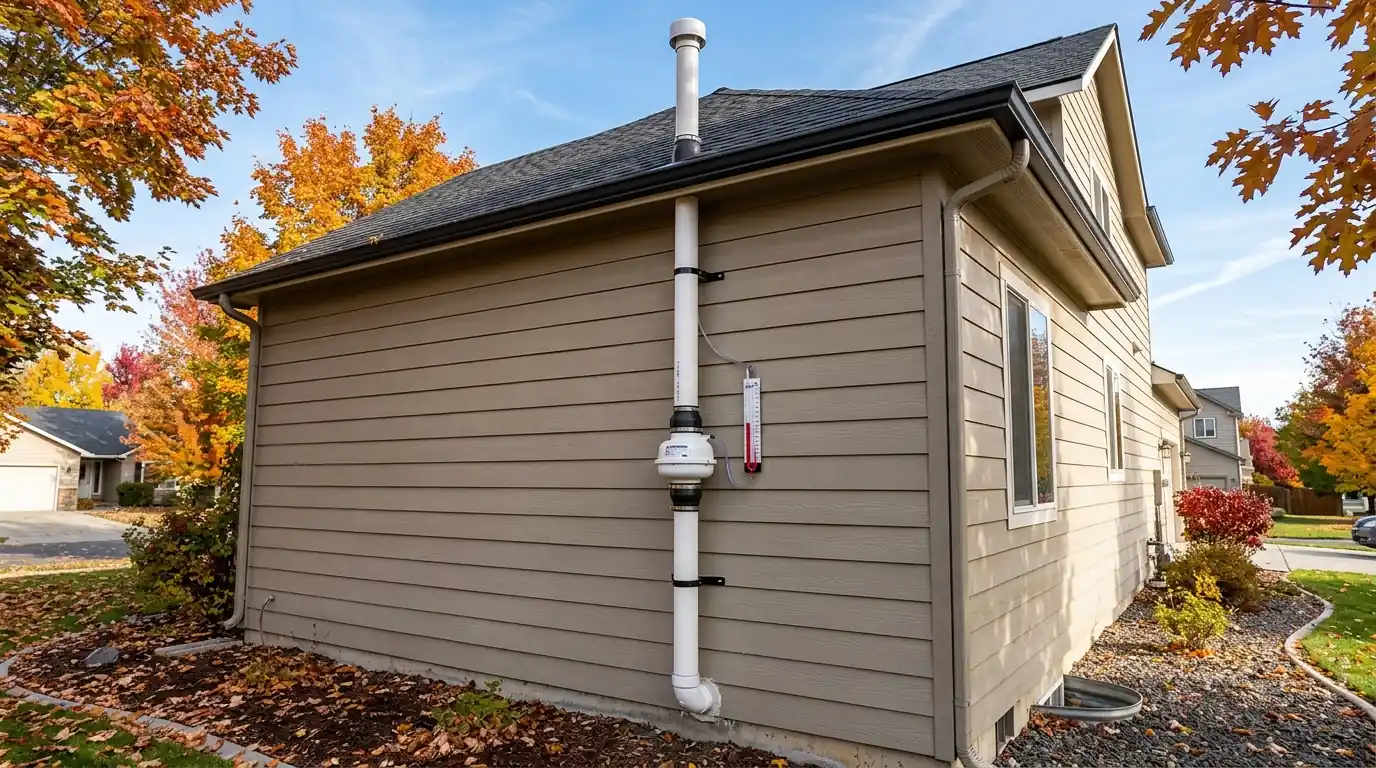
A mitigation system reverses that. A fan creates low pressure under the slab or the crawlspace membrane, so soil gas is pulled into a sealed pipe and vented above the roof instead of into the living space. Done right, the fan runs quietly year round and a gauge on the pipe shows it is working.
What changes the price of radon mitigation
What a radon system install includes
Radon systems we install
Sub-slab depressurization
For basements and slab-on-grade homes, we core a hole through the slab where gas can be pulled from the widest area under the floor, usually near the middle of the house or the sump. A suction pit is dug out under the hole, a sealed PVC riser goes from there to an inline fan in the attic, garage or outside wall, and the discharge is vented above the roof eave. We seal the major cracks and the sump lid so the fan pulls from the soil, not from the house, and fit a manometer on the pipe so you can see the system is drawing.
Crawlspace membrane systems
Many older Spokane homes sit over a dirt or gravel crawlspace, which lets soil gas rise straight into the floor system. Here the fix is a heavy plastic membrane laid over the ground and sealed up the foundation walls and around piers, with a perforated pipe or suction point under it connected to a fan and roof vent. The membrane also cuts crawlspace moisture. Where a house has both a basement and a crawlspace, we tie both into one fan if the readings allow it.
Retesting and system checks
Every system we install is followed by a retest after it has run for at least a day, so you see the before and after numbers. We also check existing systems: fans that have failed or gone noisy, manometers that read zero, vent pipes that discharge too low, and cracks that opened since the original install. A fan replacement is a common fix on systems that are ten or more years old. If you are buying a home that already has a system, we can check it and run a fresh test so you know it still works.
Why radon matters more here
Spokane, Stevens, Pend Oreille and Okanogan counties are all EPA radon Zone 1, the highest predicted category, and a state report found 60 percent of Spokane County houses at or above the 4 pCi/L action level. The EPA recommends fixing any home at that level and considering it between 2 and 4. Because a heated house draws soil gas in for months at a time, a working system matters here, and a retest every couple of years confirms it is still doing its job.
How a radon mitigation job goes
- 1
Review your test
Short-term or long-term result and where it was taken.
- 2
Inspect the foundation
Slab, crawlspace, sump and entry points.
- 3
Check suction
A diagnostic test shows how air moves under the floor.
- 4
Quote the system
Pipe route, fan and sealing priced in writing.
- 5
Install
Suction point, riser, fan, roof vent and manometer.
- 6
Seal
Sump lid, cracks and gaps around pipes.
- 7
Retest
Before and after numbers in writing.
Signs an existing radon system needs service
Radon mitigation questions
What level of radon needs fixing?
The EPA recommends fixing any home at 4 pCi/L or higher and considering it between 2 and 4 pCi/L.
Do I need a test before you install a system?
Yes. We size the system from a recent test, and we retest afterward so you can see the drop.
Will a radon fan raise my power bill?
A little. Radon fans are small and run continuously, typically using about as much power as a light bulb or two.
Can you fix radon in a house with a crawlspace?
Yes, with a sealed membrane over the ground and a fan drawing from under it. It also helps with crawlspace moisture.
How long does an install take?
Most homes are done in a day, with the retest running after the system has operated for at least a day.
Is radon a problem only in old houses?
No. New and old homes can both test high. The soil under the house matters more than its age.
Other air quality & ductwork services we handle
Air Duct Cleaning
Seasonal service, fewer breakdowns.
Air Duct Cleaning detailsDuctwork Installation
Sized, quoted and permitted.
Ductwork Installation in SpokaneIndoor Air Quality
Sized, quoted and permitted.
How we handle indoor air qualityHigh radon test? let us bring it down.
Call about radon mitigation in Spokane, WA.